
What You’ll Learn
Do ground conditions affect crane lifts?
Yes, ground conditions on a lift site impact the safety and efficiency of the lift. Inadequate ground conditions like recently backfilled areas and saturated soils can create instability if the conditions are not communicated and planned for ahead of time.
It’s also important to monitor ground conditions during the lift to ensure that they don’t change and cause issues.
In this blog:
- What is Ground Bearing Pressure?
- Ground Conditions Are Complex
- Common Misconceptions About Crane Setup
- Why Accurate Site Information Matters
- Shared Responsibility Creates Safer Projects
- Planning for Unknown Ground Conditions
- Continuous Monitoring is Essential
- Best Practices for Owners and Contractors
When people think about cranes, they often focus on what is visible—the size of the crane, the length of the boom, the weight of the load, or the complexity of the lift.
While these are all important factors, one of the most critical elements of every crane operation is rarely noticed: the ground beneath the crane.
Every lift, regardless of crane size or load weight, depends on one fundamental principle.
The supporting ground must be capable of safely supporting the loads imposed by the crane.
No crane, regardless of its capacity or technology, can safely perform if the supporting ground cannot adequately distribute and resist the forces generated during lifting operations.
At Active Crane Rentals, we believe that successful crane operations begin long before the crane arrives on site.
Safe lifting starts with planning, communication, accurate information, and a thorough understanding of site conditions.
What Is Ground Bearing Pressure?
Ground Bearing Pressure (GBP) is the amount of force transferred from a crane into the supporting ground through its outriggers or other support systems.
Although cranes may weigh hundreds of thousands of pounds, that weight is not distributed evenly across the entire machine.
During lifting operations, significant forces are concentrated at the outriggers, creating localized ground pressures that can exceed the supporting capacity of the underlying soil if not properly managed.
Ground Bearing Pressure is influenced by numerous factors, including:
- Crane model and configuration
- Counterweight configuration
- Boom length and operating radius
- Load weight
- Outrigger reaction forces
- Mat size and support systems
- Ground composition
- Soil moisture and drainage
- Weather conditions
- Existing site improvements
Understanding these variables allows crane companies to properly plan equipment configuration and determine the appropriate load distribution system for each project.
Ground Conditions Are Complex
One of the most common misconceptions on construction sites is assuming that if the surface appears stable, it is capable of supporting a crane.
Unfortunately, this is not always the case.
Many construction sites contain:
- Recently disturbed or backfilled areas
- Underground utility crossings
- Drainage structures
- Vaults and underground chambers
- Existing foundations
- Previously excavated trenches
- Variable soil conditions
- Saturated ground following rain events
These conditions are often hidden beneath an otherwise stable-looking surface.
Likewise, asphalt, concrete, gravel, or stone do not
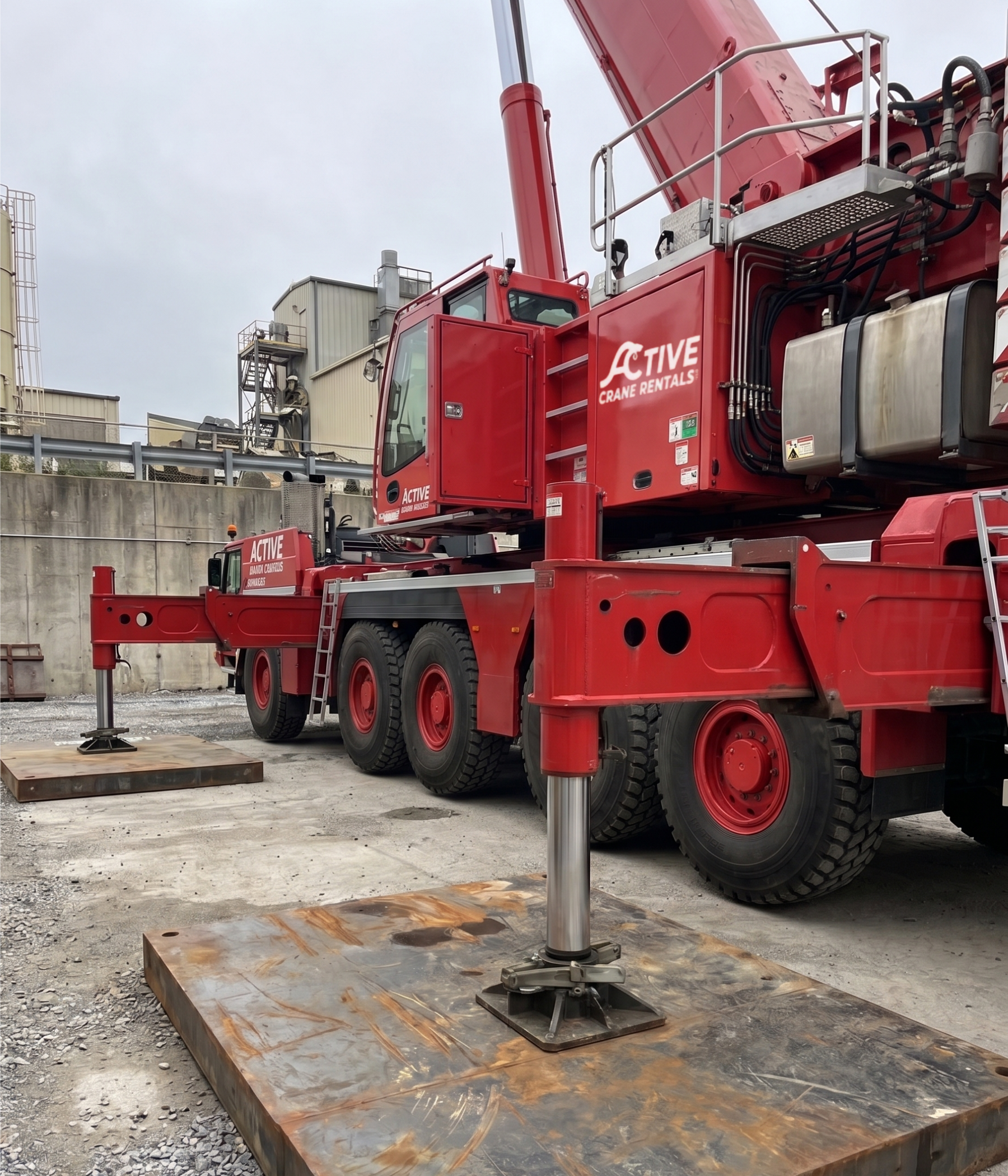
automatically indicate adequate support capacity. Their ability to support crane loads depends on factors such as thickness, compaction, reinforcement, subgrade conditions, and moisture content.
Common Misconceptions About Crane Setup
“It’s Asphalt, So It Must Be Strong.”
Asphalt is designed primarily for vehicle traffic, not concentrated outrigger loads. The supporting base and underlying soil often determine whether asphalt can safely support crane operations.
“Concrete Can Support Anything.”
Concrete may have excellent compressive strength, but crane loads can produce localized punching forces. Slab thickness, reinforcement, and the supporting subgrade all influence whether a concrete surface is suitable for crane setup.
“Stone Always Makes the Ground Stronger.”
Stone can improve load distribution, but simply placing stone over soft or unstable ground does not necessarily increase the supporting capacity of the underlying soil.
“Virgin Ground Is Always Safe.”
Undisturbed native soils generally perform better than recently disturbed or backfilled areas, but they can still vary significantly depending on soil type, moisture content, and environmental conditions.
Every site should be evaluated individually.
Why Accurate Site Information Matters
Successful crane operations rely on accurate information from every member of the project team.
Lift planning is only as reliable as the information provided before the crane arrives.
Information that can significantly affect crane setup includes:
- Planned crane location
- Load weights
- Crane access routes
- Underground utilities
- Existing structures
- Recently disturbed areas
- Backfilled trenches
- Drainage systems
- Site grading
- Temporary work platforms
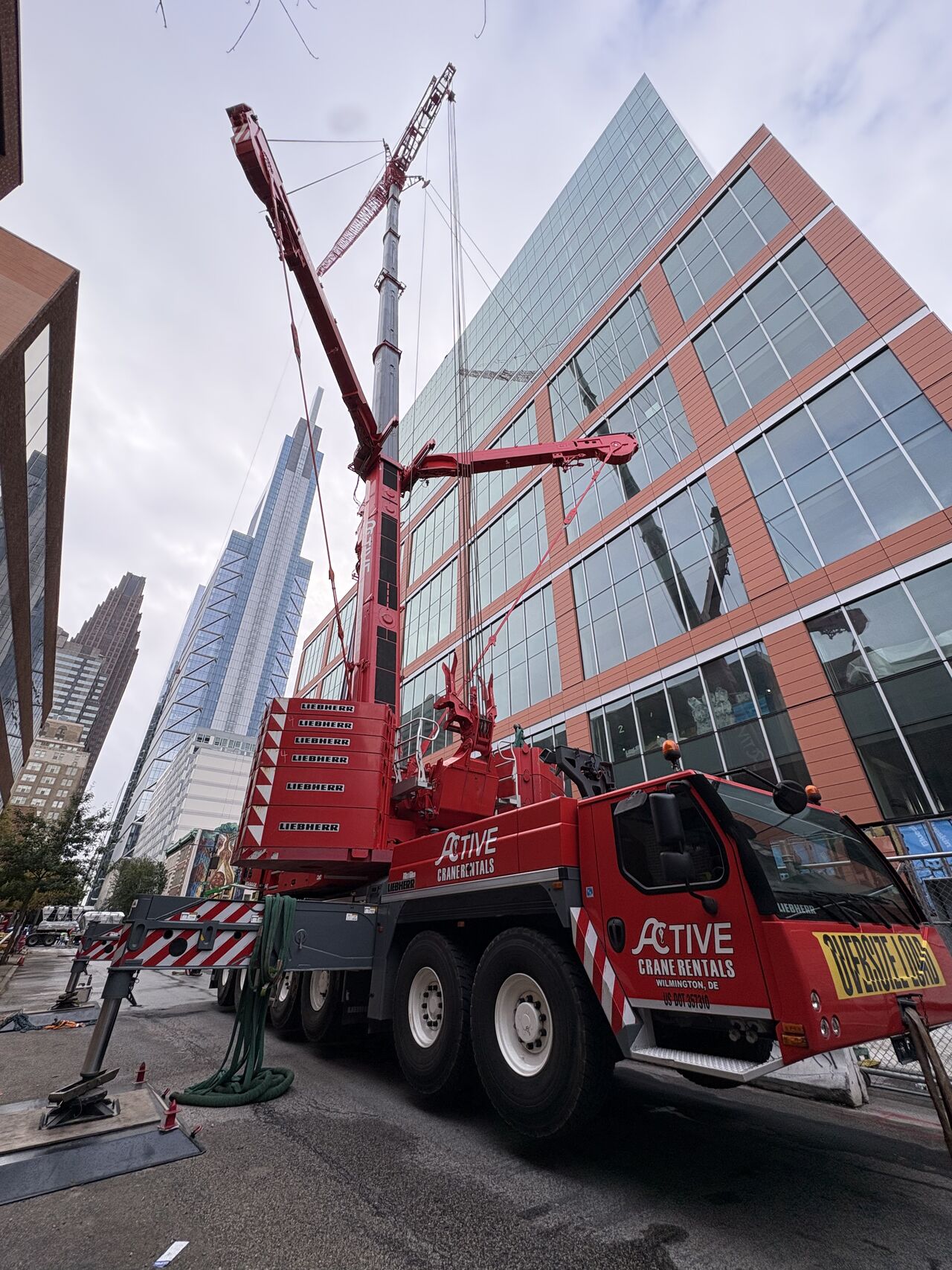
The more complete the information, the more effectively crane companies can plan equipment selection, mat sizing, crane positioning, and lift execution.
Safe crane operations are a collaborative effort.
OSHA 1926.1402 requires that the supporting ground be firm, drained, and graded to support the crane and associated loads.
The standard also requires the controlling entity to inform the crane user or operator of known hazards beneath the setup area, including underground utilities, voids, and recently disturbed ground.
While the controlling entity is responsible for providing suitable supporting conditions and communicating known hazards, crane companies also play an important role by:
- Reviewing available project information
- Evaluating crane configurations
- Determining outrigger reactions
- Selecting appropriate crane mats and support systems
- Inspecting setup locations
- Monitoring ground conditions throughout operations
Safe projects are achieved when information flows openly between owners, contractors, engineers, and crane professionals.
Planning for Unknown Ground Conditions
Construction projects do not always provide complete geotechnical information before work begins.
When supporting ground conditions cannot be fully verified, additional precautions become necessary.
At Active Crane Rentals, unknown ground conditions are approached conservatively through additional planning and field verification measures.
These may include:
- Using conservative assumed ground bearing values during planning
- Increasing crane mat size to improve load distribution
- Performing detailed visual evaluations before setup
- Conducting test lifts when appropriate
- Continuously monitoring crane level, outrigger settlement, and mat performance
throughout operations
If conditions differ from those anticipated during planning, operations should stop until the situation can be reassessed.
Continuous Monitoring Is Essential
Ground conditions are not static.
Weather, moisture, vibration, adjacent construction activity, and changing loads can all affect supporting conditions during a lift.
Operators and field personnel should continuously monitor for:
- Outrigger settlement
- Mat displacement
- Surface cracking
- Soil movement
- Changes in crane level
If instability is observed, lifting operations should cease until the cause has been identified and corrective measures have been implemented.
Best Practices for Owners and Contractors
Before scheduling a crane, consider the following:
- Identify the proposed crane setup location.
- Communicate known underground hazards.
- Inform the crane company of recently disturbed or backfilled areas.
- Provide available geotechnical information when applicable.
- Discuss crane access limitations during project planning.
- Coordinate any changes to crane location or project scope before mobilization.
These steps help improve safety while reducing delays and unexpected field modifications.
Building a Safer Industry Together
Technology continues to improve crane design, lift planning software, and engineering capabilities, but one principle remains unchanged: Every successful lift begins with a stable foundation.
Ground conditions are one of the most important—and often least understood—components of crane safety.
At Active Crane Rentals, we remain committed to continually improving our policies, procedures, employee training, and planning processes while working alongside owners, engineers, contractors, and project teams to promote safer crane operations throughout the industry.
Safe lifting is never the result of a single decision. It is the product of planning, communication, technical knowledge, and a shared commitment to doing the job safely.
Contact Active Crane today to request an estimate and start your next project with clarity, speed, and precision.

FAQs
What is Ground Bearing Pressure (GBP) in crane operations?
Ground Bearing Pressure (GBP) is the concentrated force transferred from a crane into the ground through its outriggers or tracks.
Even if a crane weighs hundreds of thousands of pounds, this weight shifts dynamically during a lift, creating intense, localized pressure that can easily exceed soil capacity if not properly managed.
What are the OSHA requirements for crane ground conditions?
Per OSHA regulation 1926.1402, the controlling entity must ensure the ground is firm, drained, and graded sufficiently to support crane operations.
Additionally, they are legally required to inform the crane operator of all known subsurface hazards, such as underground utilities, vaults, or recently backfilled trenches.
How do crane operators manage unknown ground conditions?
When geotechnical data is unavailable, crane professionals take conservative precautions.
This includes utilizing lower assumed ground bearing values during lift planning, increasing crane mat sizes to improve load distribution, conducting thorough visual site inspections, performing test lifts, and continuously monitoring for any outrigger settlement during operation.
Recent Comments